The Shapiro Family Story
Every family has a story. Ours has traveled through old towns, changing borders, three family names, handwritten records and books filled with Torah. This part of the story follows Emanuel Shapiro's family backward from America to Alsėdžiai and Volozhin. Rosalie stands with Emanuel at the center of the family they built. Her Teller family has its own branch and its own story.
Long before the family used the name Shapiro in America, records called them Shmukler and Dubinsky. The names changed, but the people and the family continued. Their story now belongs to the children, grandchildren and great-grandchildren of Emanuel and Rosalie.
A family in Volozhin
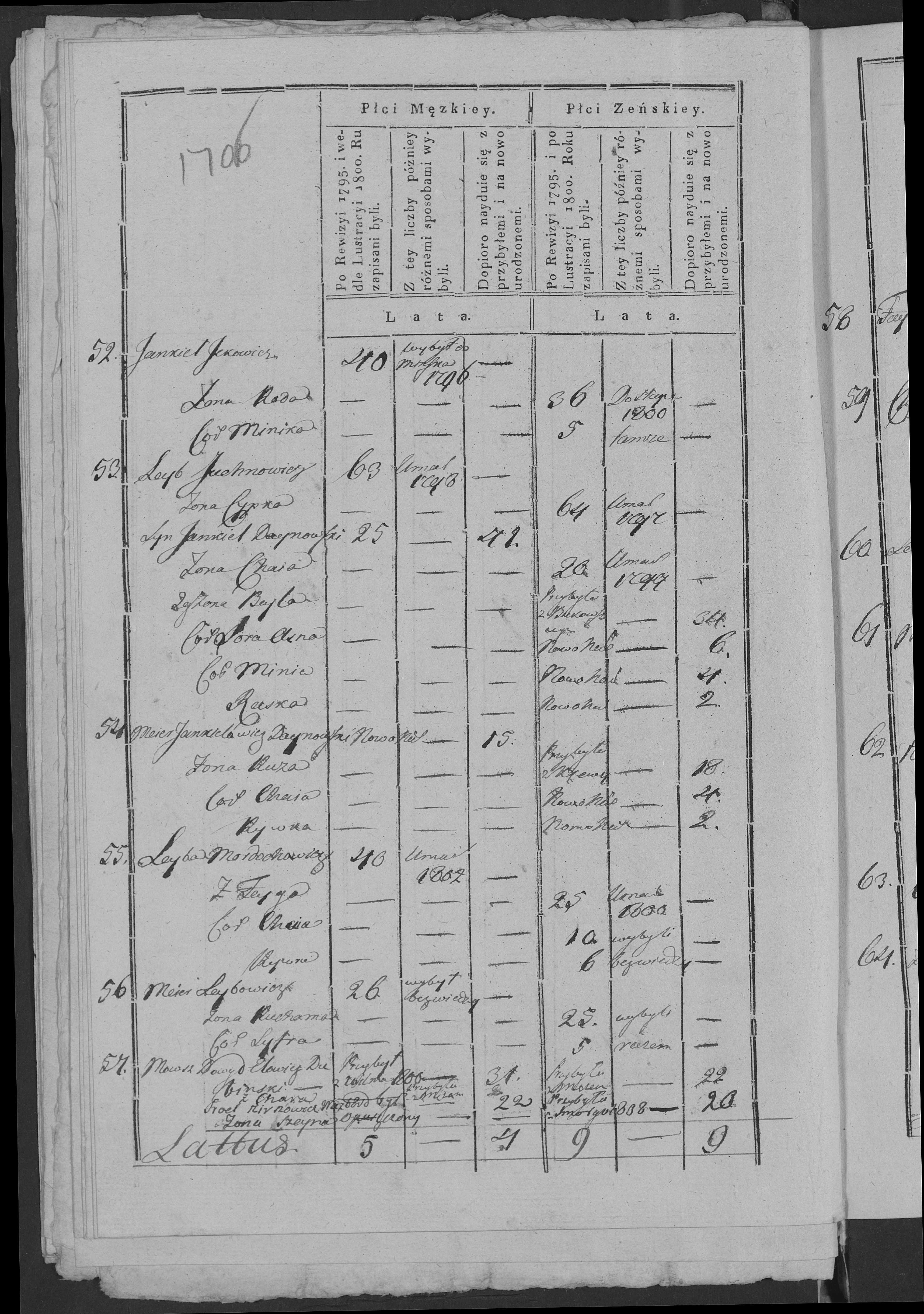
Nearly two hundred years ago, members of the Dubinsky family lived near Volozhin, a town famous throughout the Jewish world for Torah learning.
The oldest record in this story names Movsha David Dubinsky and tells us that his father was Elia. Later household lists name Itska as the son of a man called Movsha, and then Itska's son Yeshaya. Movsha David is a candidate for that Movsha, but the link is not confirmed. A few lines written by government clerks let us follow four generations:
Elia -> Movsha David (candidate) -> Itska -> Yeshaya
Movsha David's household also included a wife. The 1811 record calls her Chana. The 1816 female list gives his household a wife aged 23 and two daughters, 9 and 7. Their names are hard to read; we are still working them out.
Itska married Zelda, daughter of Iosel. Their household included children whose names appear in the old lists, including Yeshaya. These lists do not tell us what the family laughed about at home or what the children liked to do. They do something quieter: they preserve names and relationships that might otherwise have disappeared.
Sources for this section
1811 LVIA 515/15/214, FS film 102548530, f.17v reg.57
Yeshaya and Sara's sons
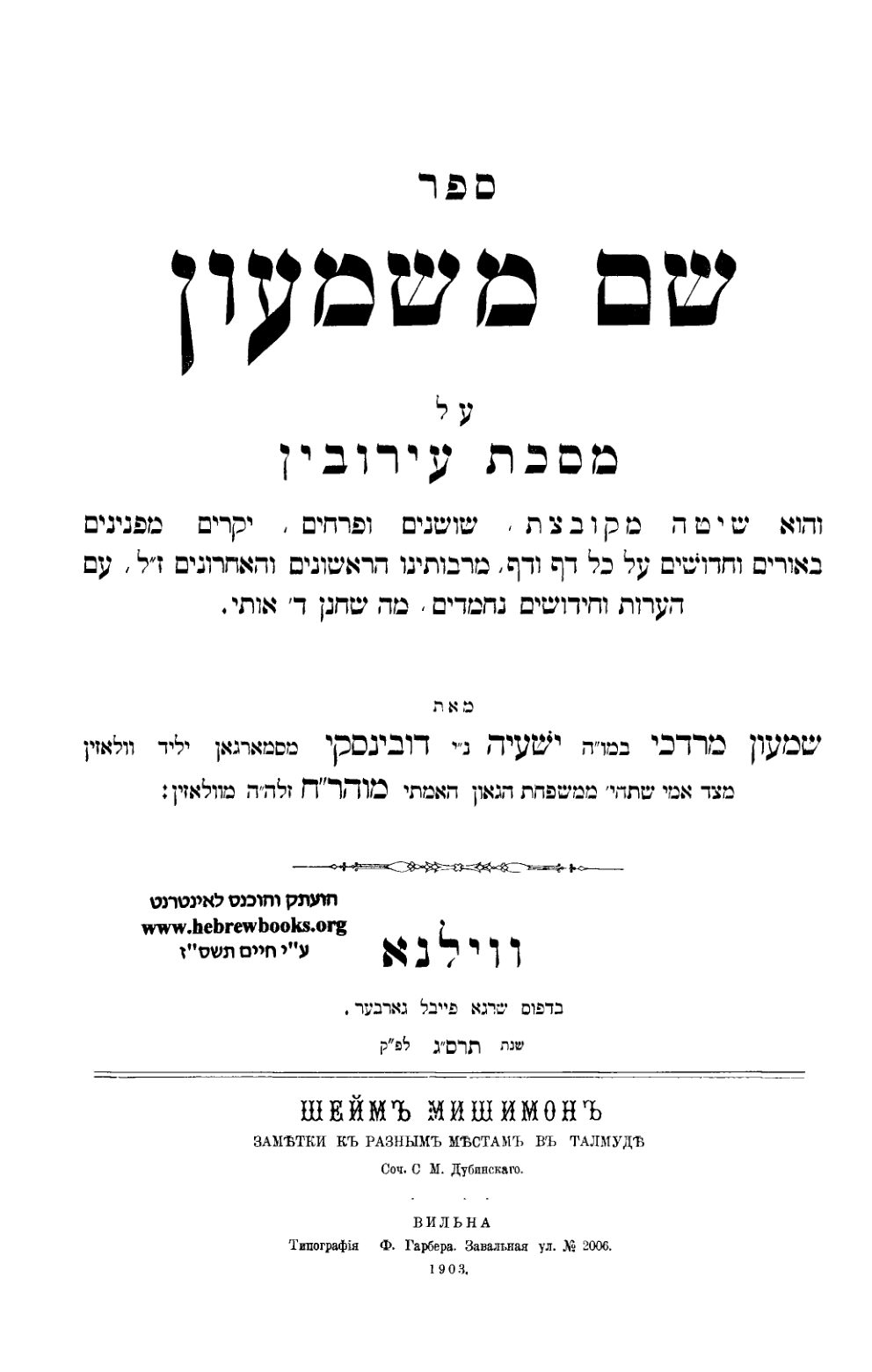
Yeshaya and Sara Dubinsky raised three sons in Volozhin: Rav Shimon Mordechai, Rav Moshe Shmuel and Rav Shlomo Yosef, who served as Av Beis Din of Kalelishok. Shimon Mordechai and Moshe Shmuel became known for Torah and books.
Shimon Mordechai kept the family name Dubinsky. His sefarim carried that name on their title pages. Moshe Shmuel's records would later carry other surnames, but the brothers remained part of the same family story.
Old rabbinic books also record that this family was related to Rav Chaim Volozhiner. They do not yet show the exact path from one family to the other. That is one of the living questions in this story, and researchers continue to look for the missing names, spouses and in-laws that will draw the full line.
Sources for this section
Shem MiShimon, Vilna 1903; 1913 Shem Tov title-page material
A wedding written in two alphabets
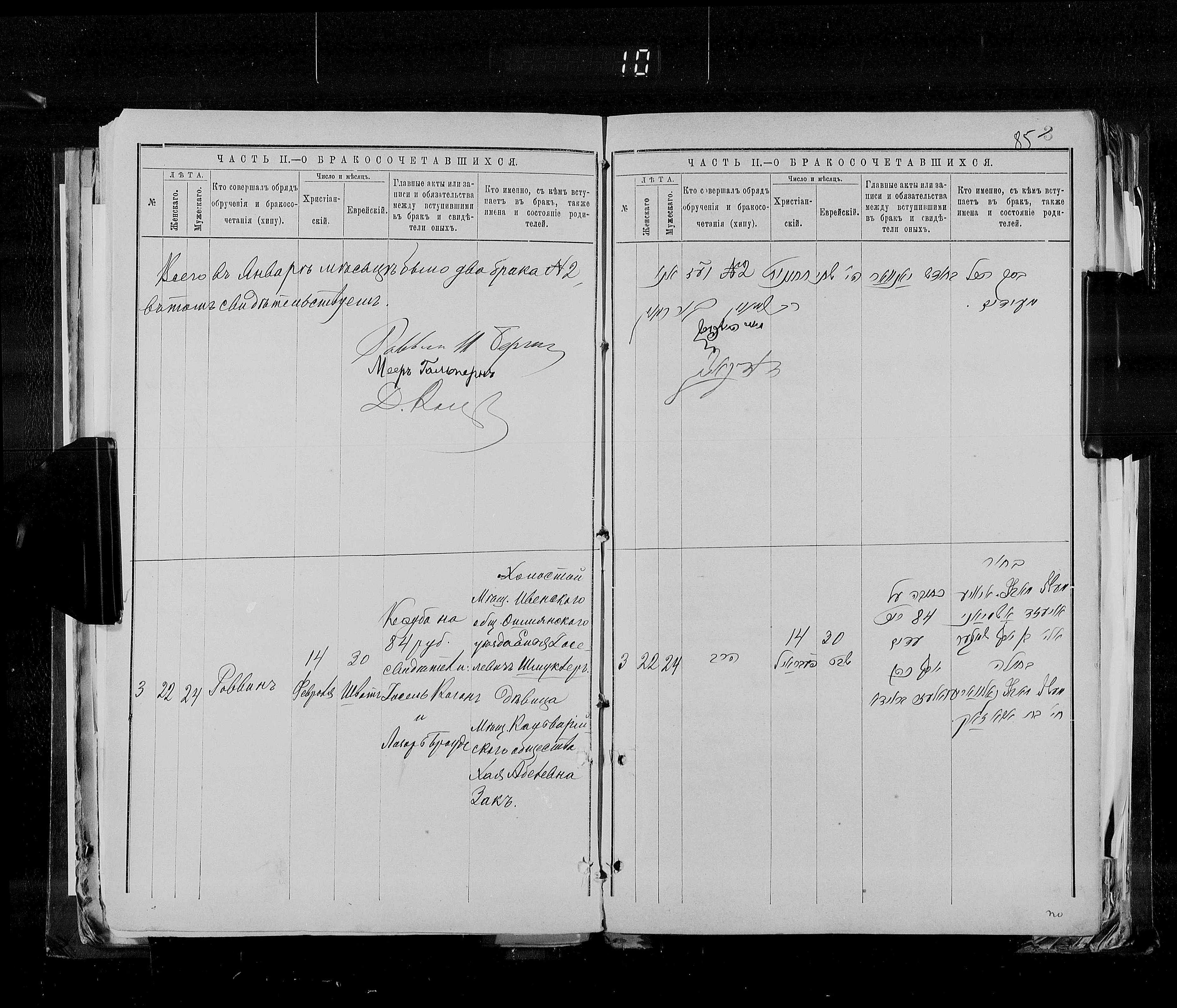
In 1903, a wedding was entered in the Telšiai register. The page tells the same moment twice: once in Hebrew and once in Russian.
The bride was Chaya, daughter of Rav Avraham Abba HaKohen Zak, from Kalvarija. The groom was Rav Moshe Shmuel under his borrowed-papers identity. The Hebrew half calls him אלי׳ בן יוסף שמוקלער; Shmukler appears on both the Hebrew and Russian halves. The bride’s Hebrew line is חי׳ בת אבא זאק. The two halves also give their communities and witnesses. The ketubah amount was eighty-four rubles.
For children today, the page is like a small puzzle from the past. The letters look different, but both sides belong to the same family moment. Later records connect Chaya and her husband to the family that lived in Alsėdžiai and eventually came to America.
Sources for this section
LVIA 1226/1/2070, FS film 2329261 img110 / DGS 4222296 img10
The children of Alsėdžiai
Rav Moshe Shmuel and Chaya had five documented children: Simcha (Shimkha), Raina Shmukler, Hyman (Chaim), Yechiel and Irving (Isaac/Isaak). Raina was born in Alsėdžiai on 7 August 1905 and died on 8 December 1906 by the old Russian calendar (21 December by today's calendar), 4 Tevet 5667, age one and a half. She was the first cousin of a different Raina Dubinsky, daughter of Rav Shimon Mordechai and Chaya Feiga. They were two different girls - cousins who shared a name.
Yechiel’s registered name was Okhel/Iokhel Shmukler. The LitvakSIG birth-register index dates his birth to 26 May 1912 Julian, 8 June Gregorian, 23 Sivan 5672, at Olsiady/Alsėdžiai. The 1927 manifest calls him Jachel and gives the family-stated birthplace Kantzan. A 1933 declaration index names him “Joel or Jochel Shapiro or Sapiro,” gives 10 June 1912 and Kurtzan, and links the same man across the Shmukler and Shapiro names. The two-day date gap and the still-unidentified Kantzan/Kurtzan name remain visible.
The documents also preserve ordinary signs of family life. Bank records name Chaya in her own town and connect her to her father Abba Zak and her brother Shimon Zak.
Sources for this section
LitvakSIG birth-register index and Yechiel/Joel identity bridge records
Moshe Shmuel saves a story
Moshe Shmuel grew up in Volozhin, surrounded by the memory of its great yeshiva. He became a rabbi, writer and historian.
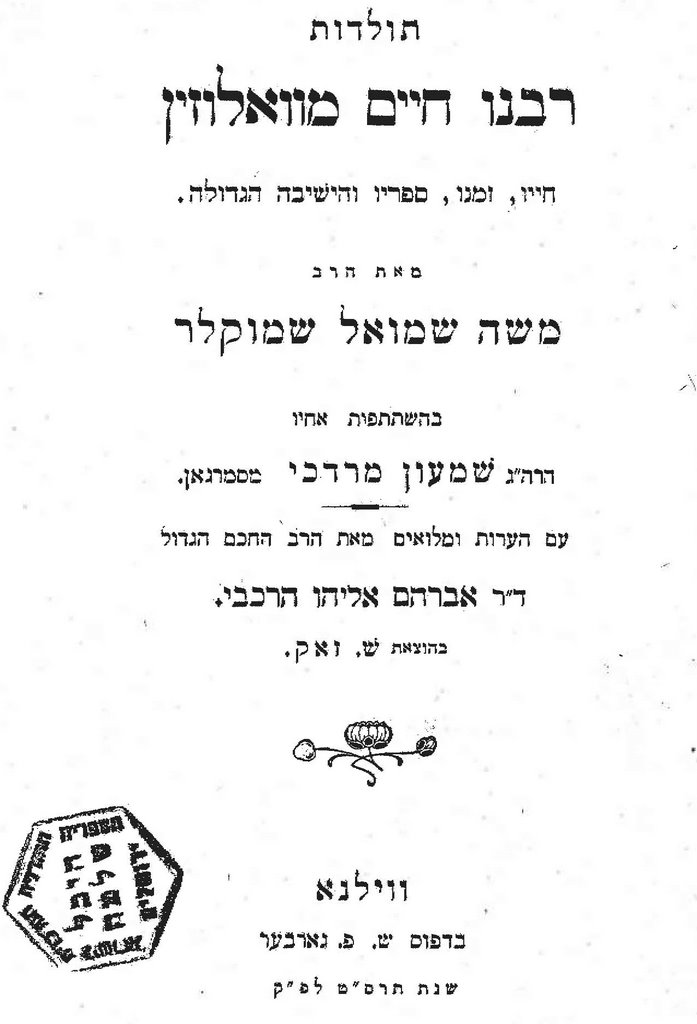
In 1909, while he was still using the surname Shmukler, he published a book about Rav Chaim Volozhiner. Its title was Toldot Rabbenu Chaim miVolozhin. Many years later, Moshe Shmuel wrote about what he remembered from Volozhin and the yeshiva's closing.
He understood that memories can disappear if no one writes them down. He became one of the people who preserved the story of Volozhin. Now his family is using his books, family memories and old records to preserve his story too.
Sources for this section
Toldot Rabbenu Chaim mi-Volozhin, Vilna 1909, HebrewBooks 46885
From Shmukler to Shapiro

The family's records tell a name story.
In 1903, the wedding register used Shmukler. The children's records from 1904, 1905 and 1912 also used Shmukler. Moshe Shmuel's 1909 book carried the same name.
By 1920, a letter from Alsėdžiai was signed "Moshe Shmuel Shapiro." In 1923, he crossed the ocean and arrived in New York as Moses Shapiro. The arrival page named his wife Chaje in Alsėdžiai and said that he was traveling to Nathan Dubinsky in New York.
One page therefore holds two of the family's names together: Shapiro and Dubinsky. It does not yet prove exactly how Nathan belonged to the family. It does show that the older Dubinsky name was still part of Moshe Shmuel's world when he reached America.
The records show when the name changed. They do not yet tell us why. That question remains open.
Sources for this section
S.S. Lituania manifest, NARA T715 roll 3366, arrived 6 Sep 1923
The family grows in America
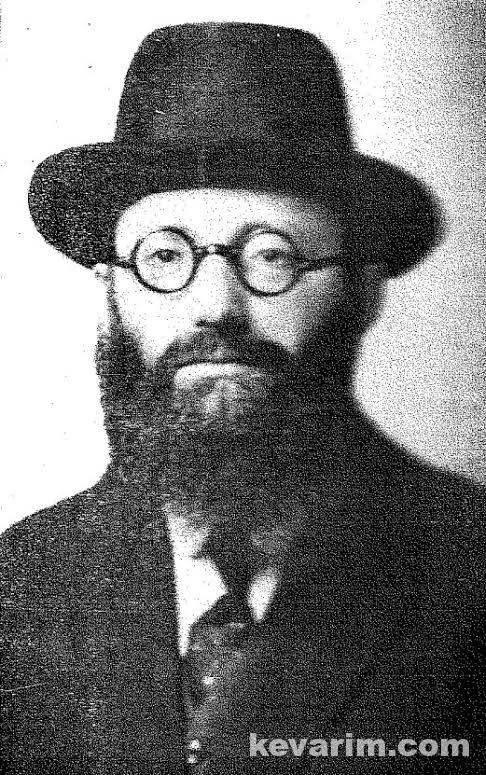
Moshe Shmuel and Chaya's family continued in America. Yechiel became known as Joel Shapiro. Joel's son Emanuel, known as Manny, married Rosalie. Together Emanuel and Rosalie built the family at the center of this book.
Their children made homes and families of their own. Their grandchildren and great-grandchildren now belong to many branches. Each branch has its own memories, photographs and stories, but they share this earlier journey through Volozhin, Alsėdžiai and America.
The family story is not finished. Some questions still wait for another record, another sefer or a memory from a relative. The children reading today are the next people who can remember it, ask about it and pass it on.
Sources for this section
Public portrait retained from the earlier Shapiro research corpus
What “we’re still checking” means
Some questions still wait for another record, another sefer or a memory from a relative. Difficult handwriting can be reviewed without changing the story until the answer has been checked.
See the questions waiting for a human eyeLiving people appear by name only. Their dates, addresses and other private details stay private.